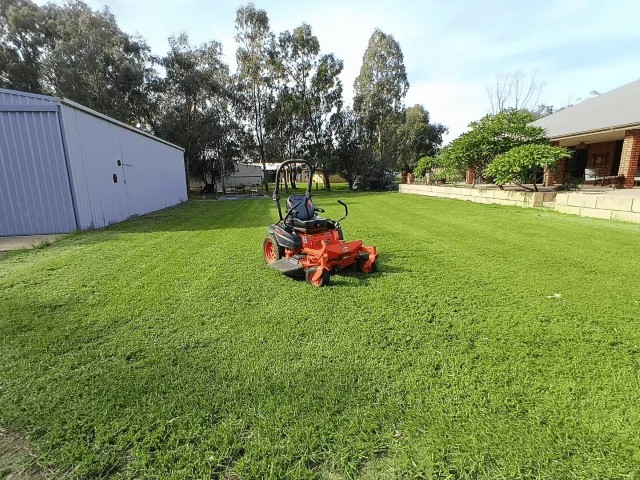
How Often to Mow Your Lawn in Byford: A Seasonal Guide
Quick answer: The ideal mowing frequency in Byford depends on the season and the "one-third rule"—never cut more than a third of the grass height. Mow weekly in peak growth (spring/summer) and reduce to every 4-6 weeks in winter's dormancy. Adjust for grass type and rainfall.
Key takeaways
- Never cut more than one-third of the grass blade height at a time.
- Mow weekly in summer and spring during peak growth periods.
- Reduce mowing to every 10-14 days in autumn.
- Mow only as needed (every 4-6 weeks) in winter.
- Grass type, watering, and fertilising also affect your schedule.
- The best time to mow is mid-morning after the dew has dried.
Knowing how often to mow your lawn in Byford can feel like a moving target. Just when you think you have a routine, the season changes and your grass has a mind of its own. The truth is, a healthy, lush lawn doesn’t come from a rigid schedule, but from understanding what your lawn needs throughout the year. This guide will walk you through Byford’s distinct seasons to keep your turf looking its best.
Why is Mowing Frequency So Important?
Your mowing frequency directly impacts your lawn's health, density, and ability to resist weeds and pests. Mowing correctly encourages the grass to grow thicker and spread, creating that desirable carpet-like effect. Cutting too much, too often, puts the plant under stress, while not cutting enough can lead to a sparse, weak lawn that invites problems.
The "One-Third Rule" is Key
Before we dive into seasons, let's talk about the single most important rule in mowing. The "one-third rule" states that you should never remove more than one-third of the grass blade’s total height in a single mow. Grass uses its blades for photosynthesis to create energy. Cutting off too much robs it of its food source, weakens the roots, and makes it vulnerable to disease and sun scorch.
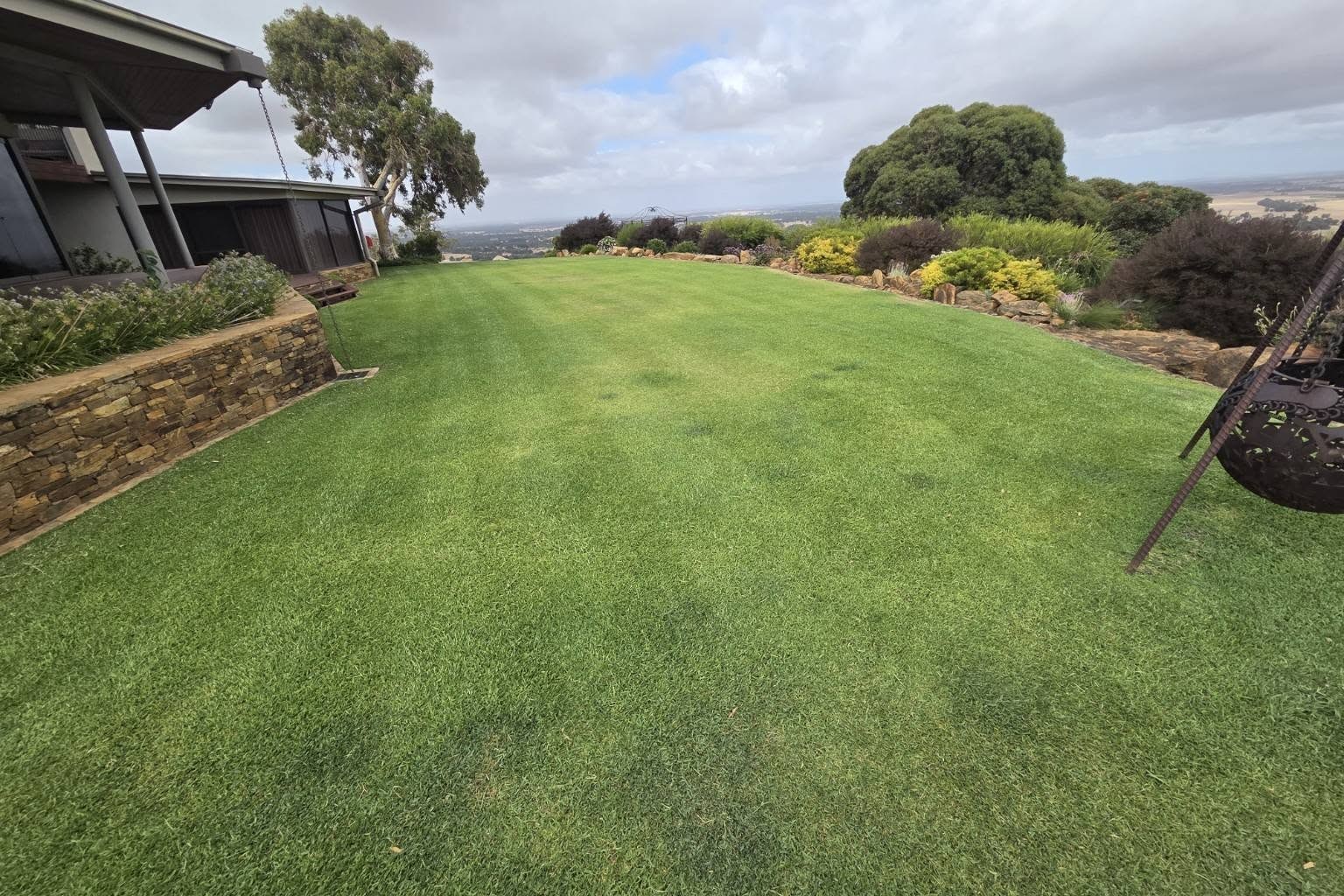
If your ideal lawn height is 40mm, you should mow it when it reaches 60mm. This principle is more important than any calendar schedule.
A Seasonal Mowing Guide for Byford Lawns
The climate in Byford and the Perth hills dictates a clear seasonal approach to lawn care. Here’s how to adapt your mowing habits throughout the year for optimal results.
Summer Mowing (December – February)
Frequency: Approximately every 5-7 days.
Summer is the peak growing season for warm-season grasses popular in WA, like Buffalo and Couch. Combined with long, sunny days, your lawn will be growing vigorously. Weekly mowing is essential to keep up. It's also wise to raise your mower height slightly. Taller grass provides more shade for the soil, reducing water evaporation and protecting the roots from intense heat. Industry research suggests that a slightly taller lawn in summer can reduce water needs by up to 20%.
Autumn Mowing (March – May)
Frequency: Approximately every 10-14 days.
As the temperatures cool and days get shorter, grass growth begins to slow down. You can gradually decrease your mowing frequency. Autumn is a crucial time for your lawn to recover from summer stress and prepare for the cooler winter months. Continuing to mow according to the one-third rule will help it store energy in its root system.
Winter Mowing (June – August)
Frequency: Approximately every 4-6 weeks, or as needed.
Winter brings dormancy for many warm-season grasses. Growth slows to a crawl or stops altogether. Over-mowing during this period can damage your lawn. Only mow when it's visibly needed to keep things tidy, and always mow on a dry day to avoid compacting the damp soil. For many Byford residents, this might mean only two or three mows for the entire season.
Spring Mowing (September – November)
Frequency: Approximately every 7-10 days.
Spring is when your lawn wakes up! As the soil warms, your grass will burst into a period of rapid growth. You’ll need to ramp up your mowing frequency again, quickly returning to a weekly schedule. A consistent spring mowing routine is vital for establishing a thick, healthy lawn before the summer heat arrives. Estimates suggest lawn growth can double week-over-week during the spring peak.
What Other Factors Affect Your Mowing Schedule?
The season is your primary guide, but other factors like grass type, watering, and fertilising also have a major impact. A healthy lawn is a system where everything works together.
Adjusting your routine based on these variables is the secret to expert-level lawn care. For example, after applying a nitrogen-rich fertiliser, you should anticipate faster growth and be prepared to mow sooner than you otherwise would.
| Factor | Impact on Mowing Frequency |
|---|---|
| Grass Type | Hybrid Bermuda or Couch grasses often grow faster and require more frequent mowing than broad-leaf Buffalo grasses. |
| Watering | Consistent, deep watering encourages healthy growth, which in turn requires more regular mowing. |
| Fertilising | Applying fertiliser boosts growth. You will need to mow more often in the weeks following an application. |
| Rainfall | A good downpour acts like a deep watering and growth spurt, often meaning you need to mow sooner than planned. |
| Shade vs. Sun | Grass in full sun will grow much faster than grass in shaded areas of your yard. You might even mow different areas at different frequencies. |
"People often think of mowing as a chore, but it's actually the most important thing you can do to cultivate a resilient lawn. Each cut is an opportunity to signal to the grass that it needs to grow thicker and stronger. It's gardening, just on a larger scale." — David Chen, Senior Horticulturalist, WA Botanical Gardens
Putting It All Together
Mastering lawn care in Byford is about observation, not just automation. Pay attention to the season, watch how your lawn responds to rain and sun, and always, always follow the one-third rule. A sharp mower blade and the right timing are your best tools for success.
If managing a dynamic mowing schedule sounds like too much work, or you simply want guaranteed professional results, it might be time to call in the experts. A reliable local service can take the guesswork out of it for you. For top-notch service in the Byford area, we recommend checking out In The Mow LawnCare — they have the local knowledge to keep your lawn thriving year-round.
Frequently Asked Questions
What height should I cut my lawn in Byford?
It depends on your grass type. Buffalo grass prefers a higher cut (30-50mm), while Couch can be cut shorter (15-25mm). Always follow the one-third rule and avoid scalping the lawn, especially in summer, as a slightly longer leaf provides shade and retains moisture.
Is it OK to mow wet grass?
It's best to avoid mowing wet grass. It can clog your mower, result in an uneven cut, and potentially spread fungal diseases. The clippings clump together instead of mulching properly. Waiting for the lawn to dry in the mid-morning is the ideal approach.
What happens if I cut my grass too short?
Cutting grass too short, or 'scalping', stresses the plant significantly. It removes too much of the leaf area needed for photosynthesis, weakens the root system, and makes the lawn more susceptible to weeds, diseases, and heat damage. It also exposes the soil to faster moisture loss.
Can I leave grass clippings on the lawn?
Yes, you can often leave short, dry clippings on the lawn, a practice called 'grasscycling'. They decompose quickly, returning valuable nutrients to the soil. However, if the clippings are long and thick, or if the lawn is wet, it is better to collect them to prevent them from smothering the grass.
How does fertilising affect my mowing schedule?
Fertilising provides your lawn with a boost of nutrients, which stimulates faster and thicker growth. After you fertilise, especially during spring and summer, you should expect to mow more frequently to keep up with the accelerated growth and maintain the ideal height.
